BIM
BIM seems to be the hardest word


Even experts trip up on explaining what BIM actually is. This is in part because it is very tempting to define BIM in overly complex terms. But understanding BIM in simple terms makes the more complicated aspects much easier to grasp.

Put simply
BIM is a process.
A process used on construction projects to streamline the delivery of digital information to meet the client’s needs.
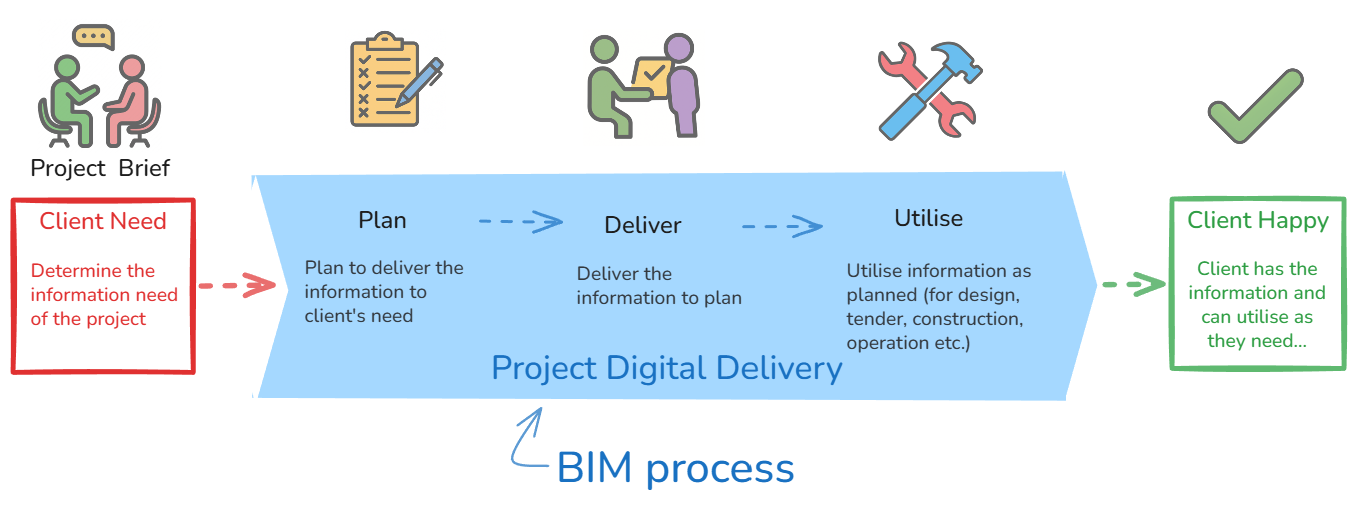
Every project has a digital delivery method, but not every project follows a structured BIM process.
A defining product and tool of the BIM process is the 3D BIM model.
To understand the BIM process you must understand the BIM model. This is because the process was developed to address the benefits and challenges BIM models presented.
The BIM model
A 3D BIM model allows us to store information in 3D objects.
As much information as you want, and likely more information than you actually need.
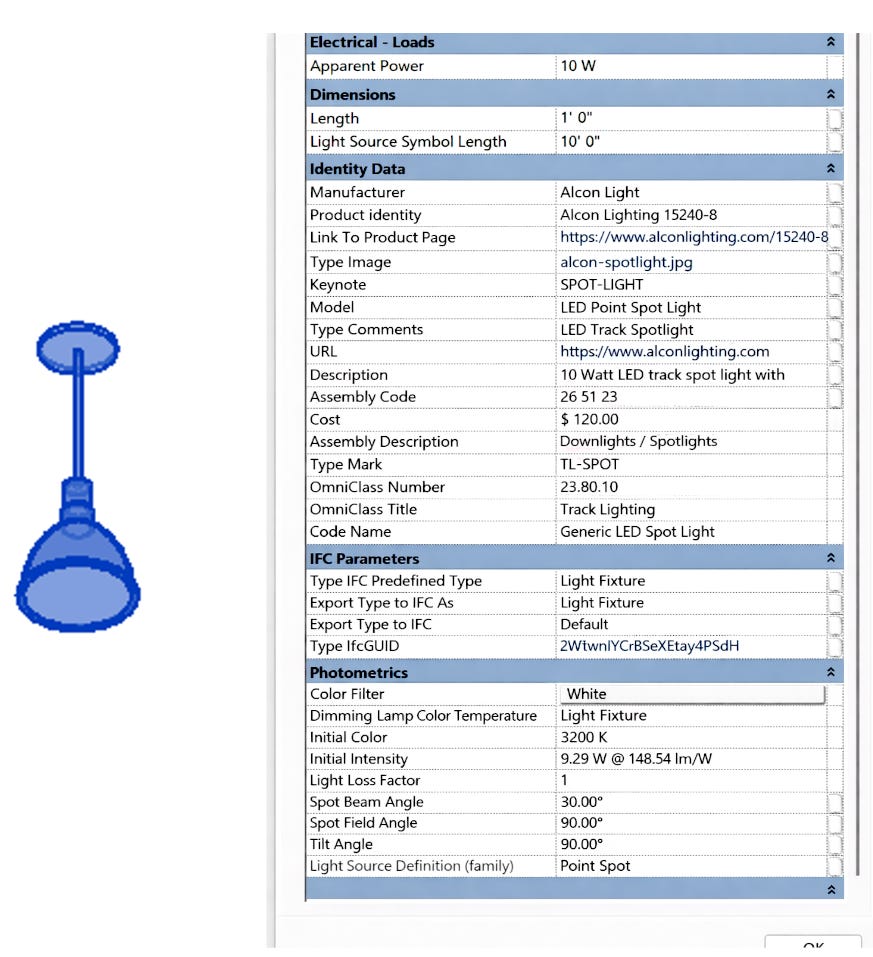
For example, this light fixture can then be placed on a 3D ceiling, connected to a 3D electrical network, distribution board, transformer and so on…
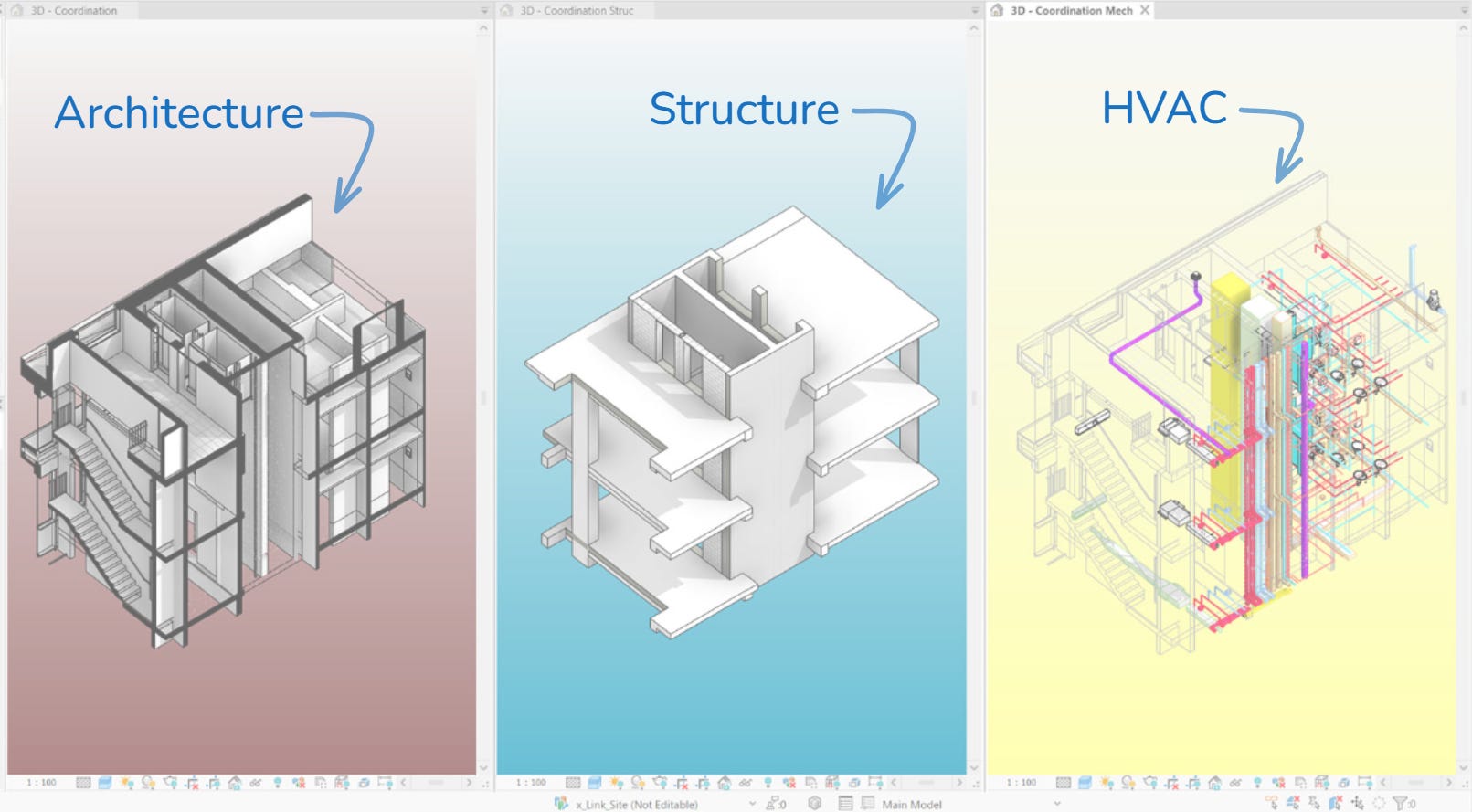
Until you have something that looks like a digital prototype of your building.
This is your BIM model.
The benefits are obvious:
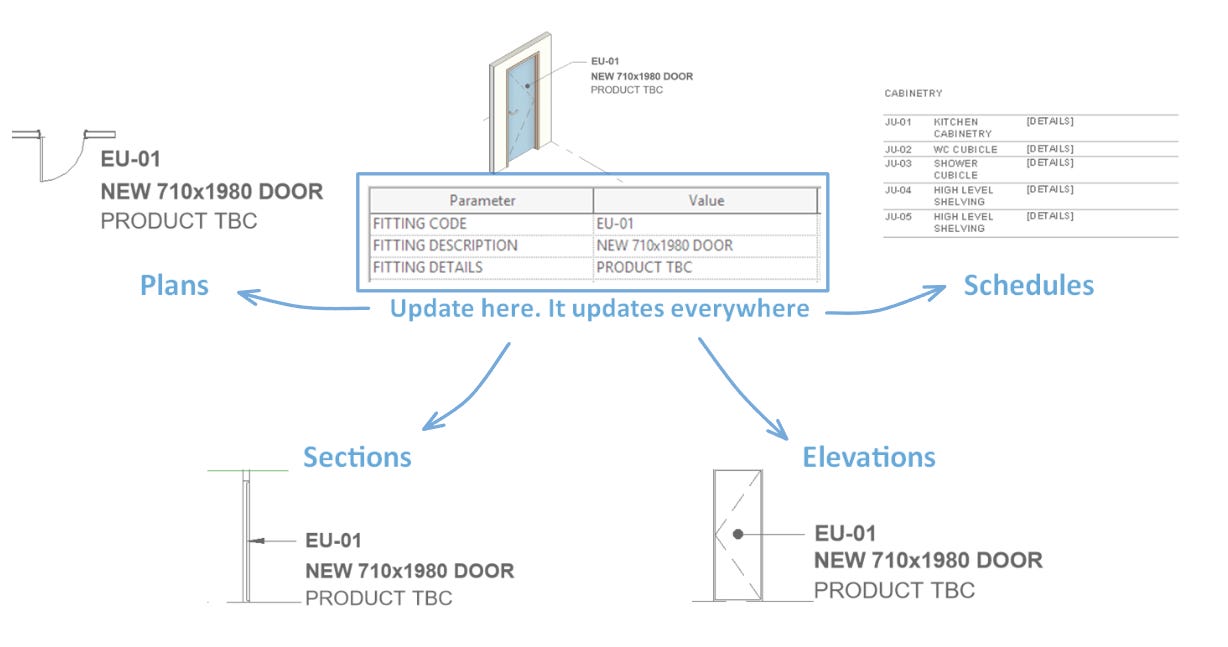
No more manual line drawings - views are real sections through a digital building
No more manual text notes - information updated in a 3D object is updated across all views
No more figuring out 2D drawings - clients, contractors, architects, and engineers can visualise and contribute in 3D
But with great power comes great complexity, and it quickly became obvious to everyone involved how difficult it is to manage all this information.
The BIM process
So some smart people came together and developed a structured digital delivery process to address the issues such as:
Scope - help the client specifically define what information they actually need
Focus - help designers avoid modelling too much or too little
Accountability - for time, quality, cost, and lessons learned
The result was a standardised process that could be applied to projects across the industry. The document that outlines this standardised process is called ISO 19650 and most countries base their BIM standards and processes on this document.

Standard forms were developed to support the process, and it became clear that someone would need to manage all of this.
And so two roles emerged:
The BIM Coordinator - managing BIM process on a project.
The BIM Manager - managing BIM workflows within a practice.

Yes, but…
Information, information, information.
Not all projects need this level of data management. Less complex projects need to be streamlined to deal with realities like:
Limited client fee
Low project complexity - for example, a solo architect updating a kitchen
Limited experience with BIM processes and tools across the design team
The processes outlined in ISO 19650 deals with complex projects thoroughly. But because it is a process heavy approach, it can make it difficult to scale down to projects of lower complexity.
One approach to bridge this gap is to develop your own practice-specific Digital Delivery Plan.
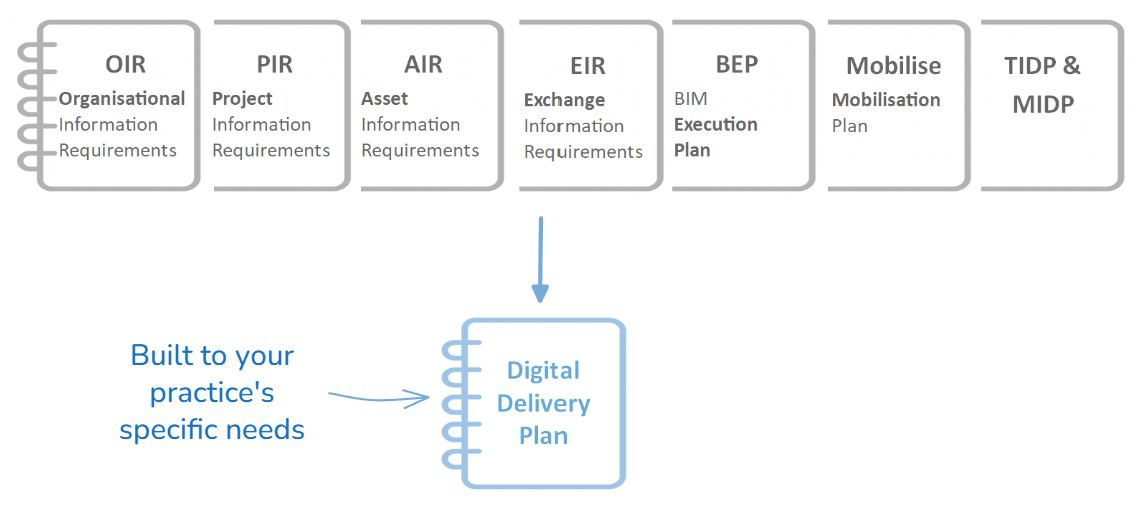
A plan that is:
Informed by ISO 19650 principles and practices
Plans for the deliverables and associated risk
Responsive to the specific needs of project your office regularly tackles
Builds structured digital habits across the team
Captures the successes and failures of a project in a live document
Evolves with the practice based on lessons learned project to project
This provides a framework for providing effective BIM processes that address both client and practice needs.
Without a simple bridge, many firms avoid BIM processes because they seem too complicated. But the cost of that choice keeps rising as the benefits of BIM continue to grow.
Why bother…
Once BIM standards are established, information created on projects can feed directly back into the practice’s library and training resources, creating a positive feedback loop that continually builds a practice’s capability from project to project.
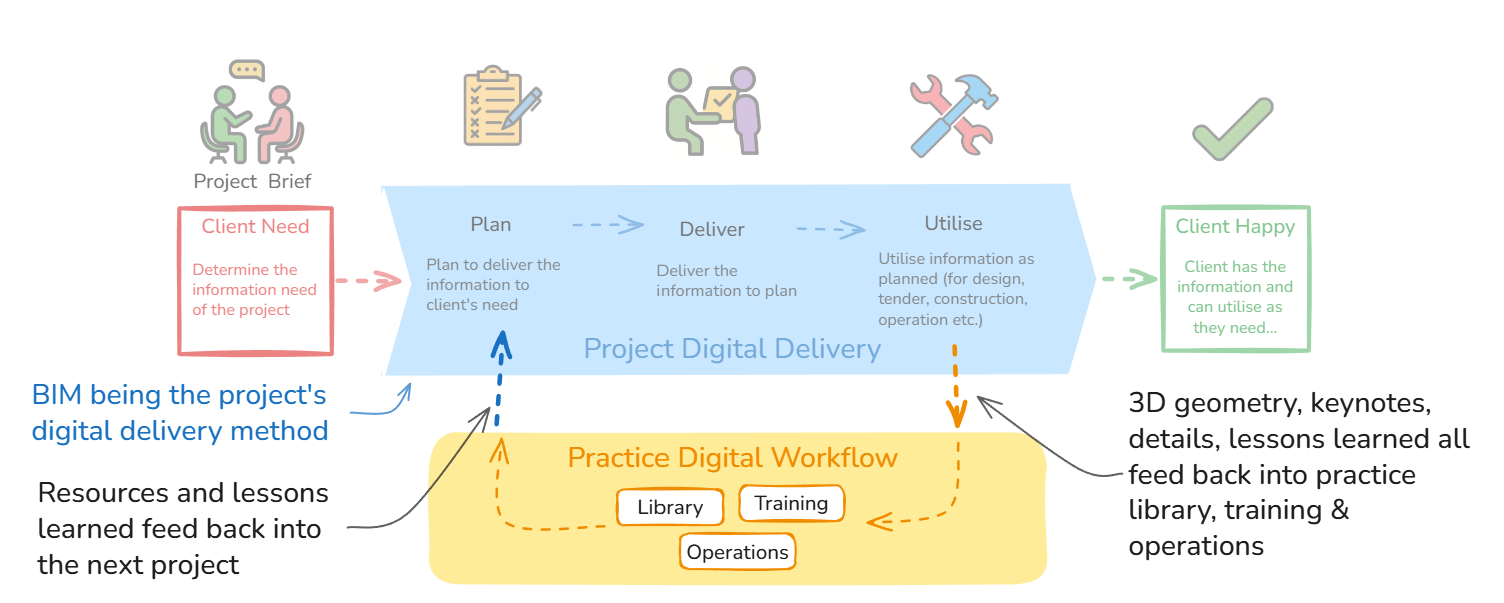
Some examples of this include library building:
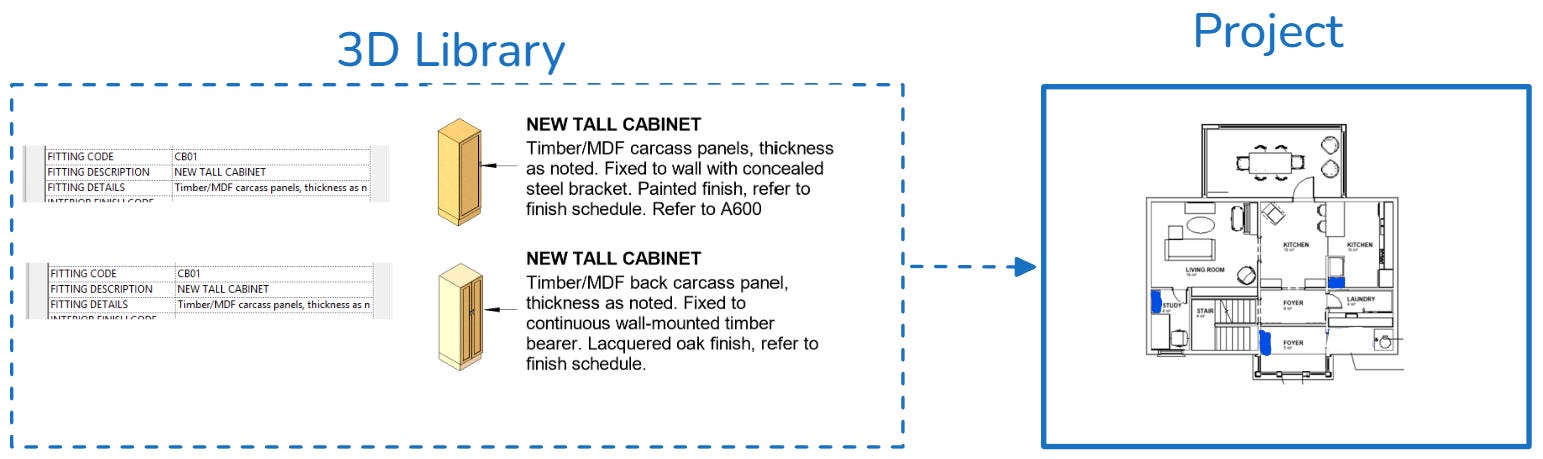
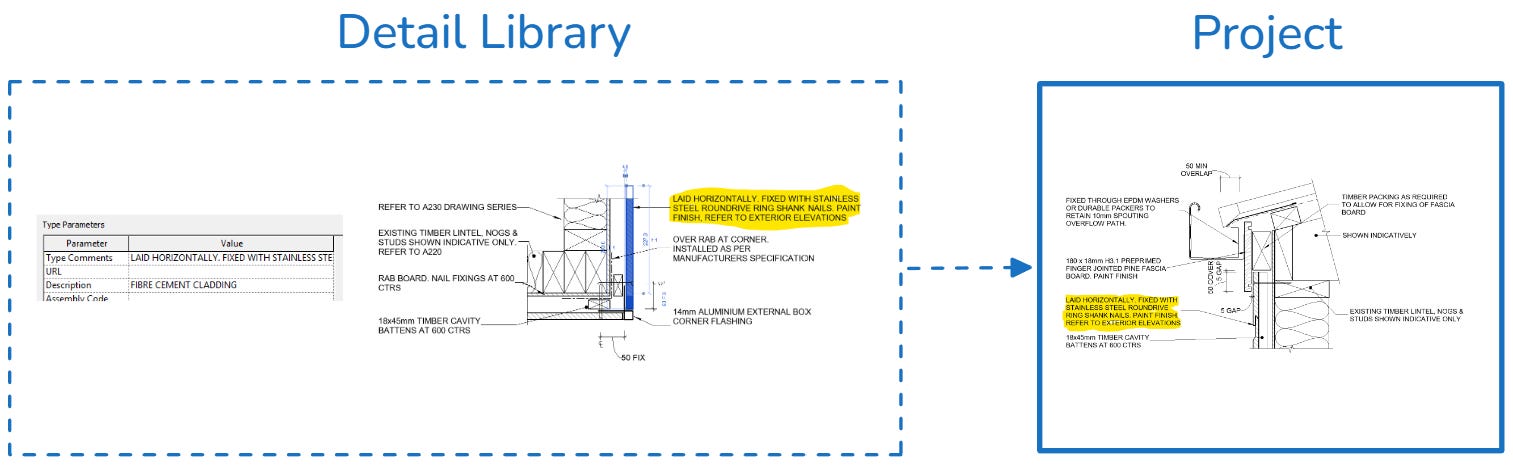
3D geometry with embedded notes can be stored in your digital library for drag-and-drop reuse on the next project
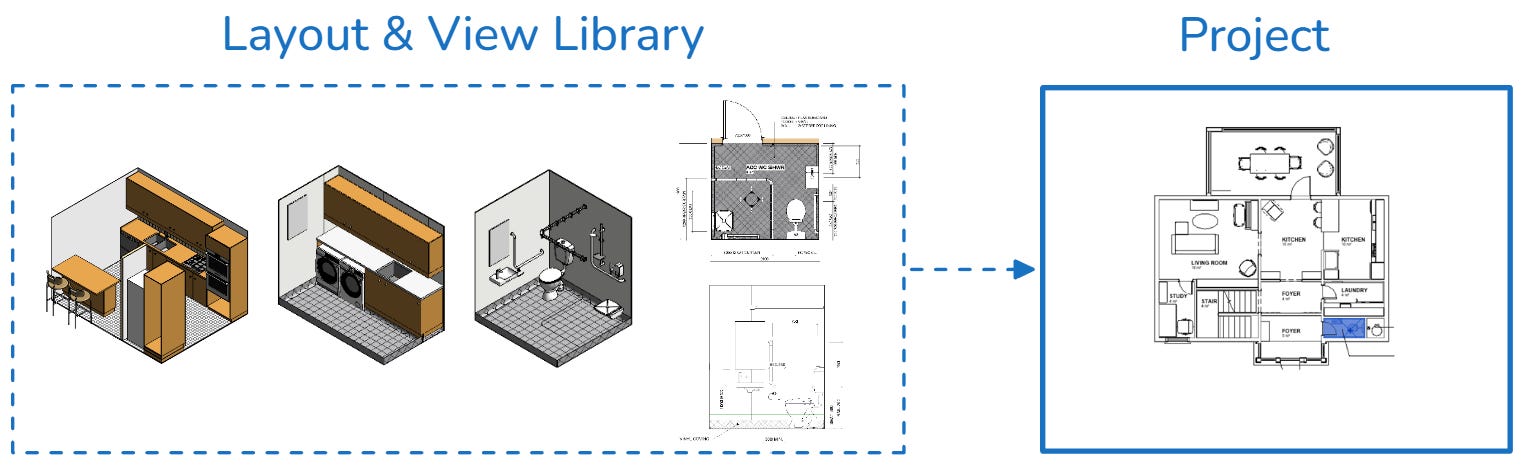
Room layouts and their associated views can be stored, then placed and adjusted as needed in new projects. Saving design, modelling and documentation time.
Detail libraries can be built of 2D components with notes embedded, rather than lines and manual entry text. This means updates to a component are reflected everywhere it is used, making detail library management clearer.
And that is not to mention the value of building a comprehensive practice database of lessons learned.
That’s not to say that adopting BIM is all plain sailing.
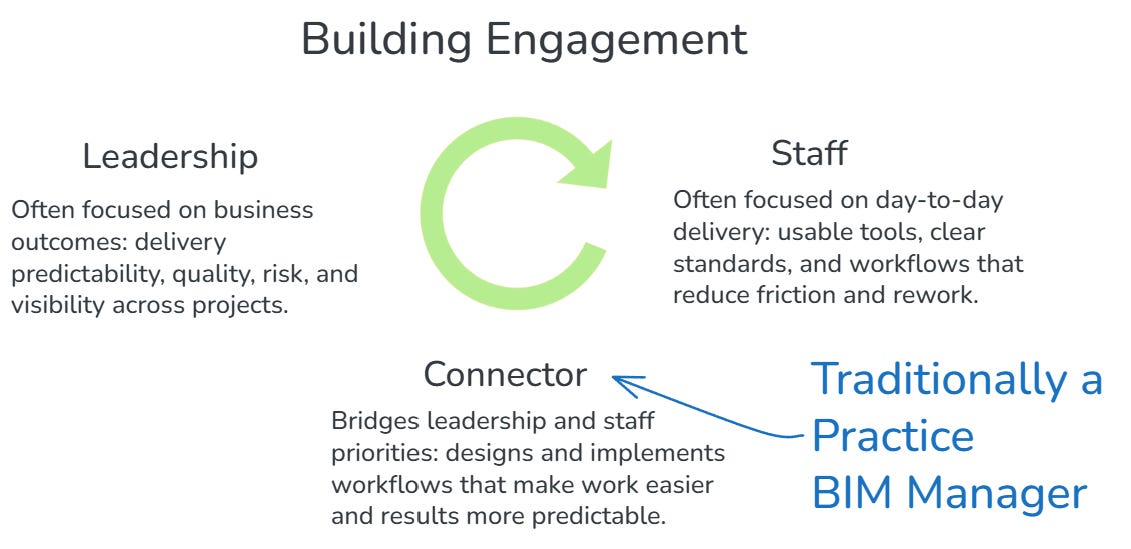
These positive feedback loops can be undermined not only by ineffective standards, tools, and processes, but also by a lack of engagement. For this reason, supporting a whole-organisation approach is an essential ingredient.
AI to replace BIM…
BIM is the process, and AI supercharges it.
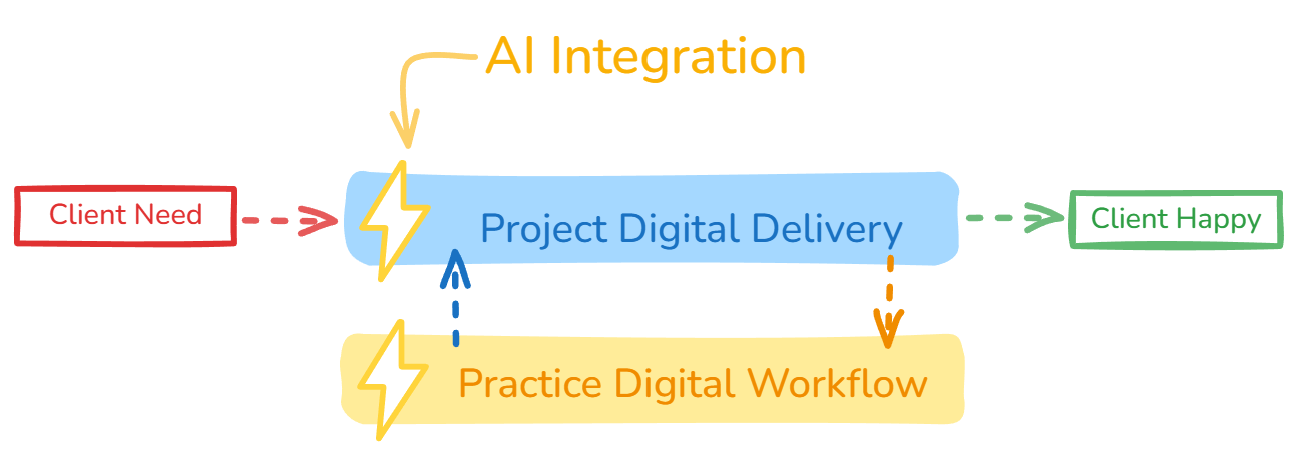
This is the growing advantage of BIM as an information-focused delivery approach that AI can plug into directly. It gives practices the freedom to decide how much of their information management is handled by AI and how much by staff.
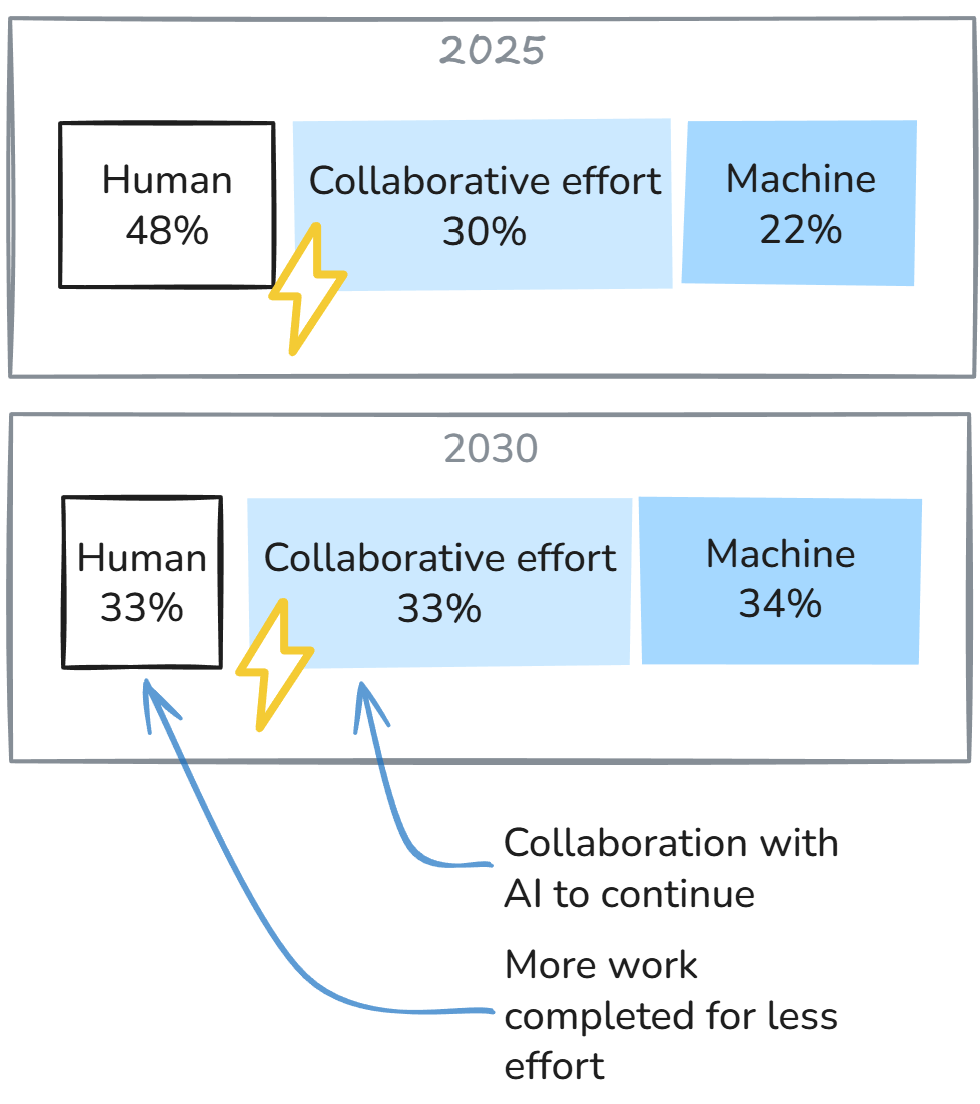
In the end, anyone can learn and use AI tools, but practices with hands-on digital delivery experience and structured information management processes can make better informed decisions that lead to reliable outcomes.
All in all
BIM is a delivery process for practices of all sizes because it creates a positive feedback loop that captures knowledge typically locked away in past projects. These loops are now being amplified through AI integration.
So, for businesses looking to catch the AI wave in a meaningful way, adopting effective BIM is an important first step.
 | A guest post by
|